
Clean Laravel Controllers: Smarter, Scalable Code
28
May
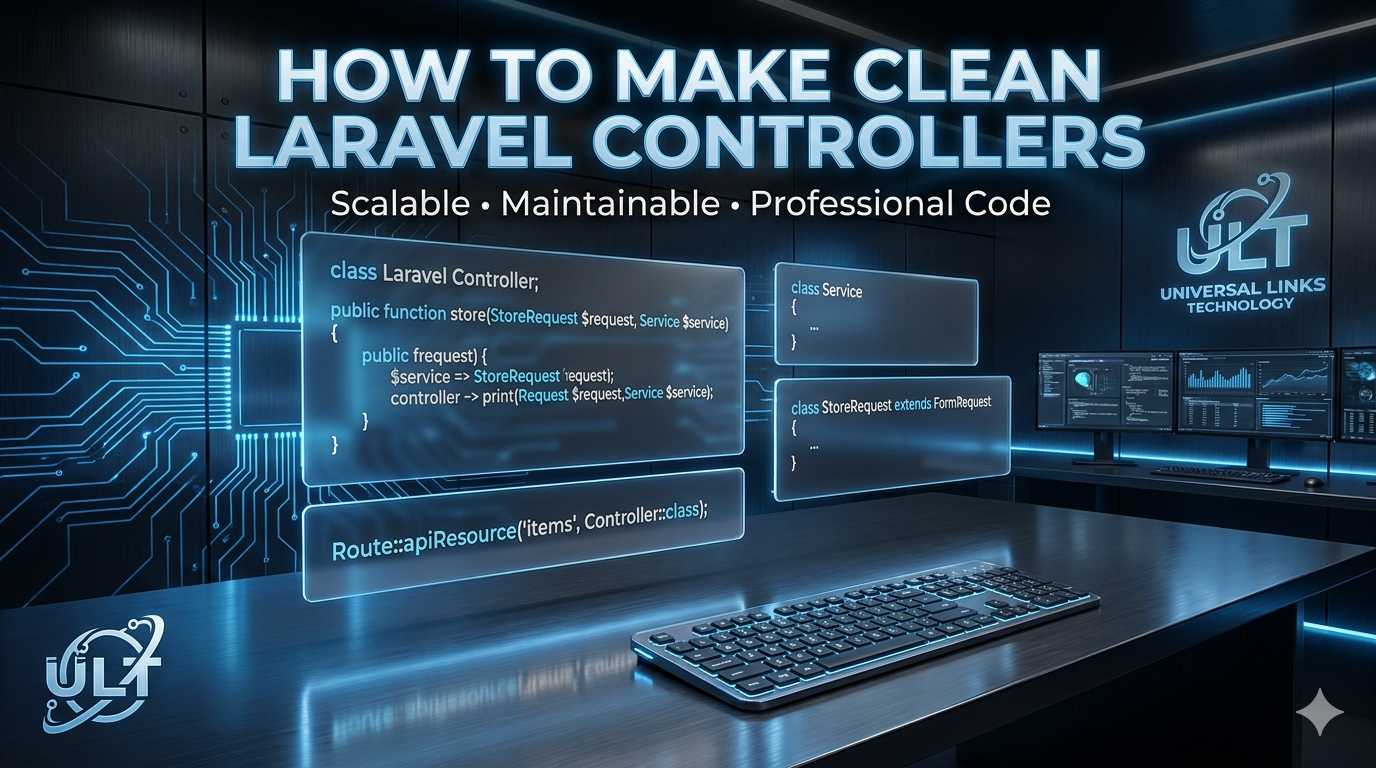
A clean Laravel Controller isn’t about writing less code—it’s about writing clear, scalable, and maintainable code that any developer can understand, test, and extend with confidence.
One of the most common mistakes in Laravel projects is turning Controllers into “god classes” filled with business rules, complex queries, and side effects. That approach works short-term, but it quickly becomes painful as features grow: code becomes harder to read, harder to test, and easier to break.
Modern Laravel architecture encourages you to keep Controllers thin and delegate responsibilities to the right layers—such as Form Requests, Services, Actions, and (when needed) Repositories. This makes your application easier to evolve, improves collaboration across teams, and reduces long-term technical debt.
Best practices for clean Laravel Controllers
- Keep Controllers focused on HTTP concerns (request → response)
- Move business rules into Service / Action classes
- Use Form Requests for validation and authorization
- Prefer Dependency Injection over calling dependencies manually
- Use API Resources for consistent JSON responses
- Consider Single Action Controllers when it fits (simple endpoints)
- Follow RESTful naming conventions for predictable structure
A well-structured Laravel Controller speeds up development, improves code quality, and helps teams ship without fear. At ULT (Universal Links Technology), we build modern Laravel applications using clean architecture principles that strengthen scalability, security, and developer productivity. Clean code isn’t just a preference—it’s a business advantage that keeps products reliable and future-ready.
Code example: Thin Controller + Form Request + Service + Resource
1) Controller (thin)

2) Form Request (validation + authorization)

3) Service (business logic)

4) API Resource (structured JSON)